Insider: Why I'm Devoted to Helping People Improve Mental Health
I launched Fog of Mind to help people get their life back. I manage anxiety and lows daily, and learned reframing can lift you out of a rut. Built for men over 40, but relevant to all.

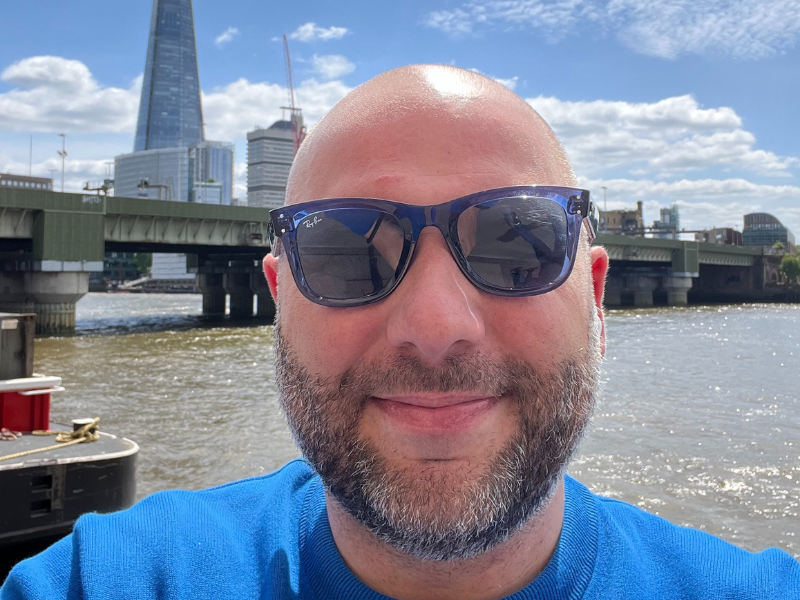
Fog of Mind Is Built for Men Over 40, But It’s for Anyone Who Needs Headspace
I launched Fog of Mind To help people with their mental health, so that they can get their life back. I walk the line of having to manage anxiety and lows every day. Life can feel traumatic, but learning to reframe how you see the world can lift you out of a rut. To be clear, Fog of Mind primarily helps men over 40 with their mental health. But the journey doesn't start and end there.
That is the clearest version of who I am aiming to serve first, because it is a group that often carries a lot, says very little, and waits far too long to ask for help. Stats tell us that men are far more likely to to commit suicide then women.
But here is the important part.
Everything I share through Fog of Mind is tried, tested, and practical, and it is relevant to anyone from any walk of life who is feeling the strain.
This is not a members-only club for one demographic. It is a set of tools for people who want to feel steadier, clearer, and more like themselves again.
Mental health is everywhere, not just in certain people

Mental health challenges are not rare. They are not niche. They are not limited to one country, one generation, one profession, or one type of person.
They show up in busy cities and quiet towns. In high-pressure jobs and in the gaps between jobs. In people who look like they have it all together. In people who have been quietly surviving for years.
Sometimes it is obvious. Sometimes it is invisible. Sometimes it arrives like a storm. Sometimes it is a slow leak that you only notice when you cannot remember what “normal” felt like.
And globally, the weight is shared. Different cultures, different systems, different pressures, but the same underlying truth: people are carrying more than they show.
2025 Mental Health Stats England
Provisional data for 2025 indicates that suicide registrations in England remained stable, with 1,433 registered in Q3 2025 (11.0 deaths per 100,000). Males continue to have a significantly higher rate of suspected suicide (15.3–18.9 per 100,000 in 2025) compared to females, with the highest risk group being 45-64 year olds.
Key Suicide Statistics for England (2025 Provisional Data)
- Total Registered Deaths: 1,433 registered in Q3 (July-Sept) 2025.
- Regional Variation (Q3 2025): Highest in Yorkshire and The Humber (14.7 per 100,000); lowest in London (7.7 per 100,000).
- Sex Disparity (Q2 2025): 17.0 deaths per 100,000 males vs. 5.6 deaths per 100,000 females.
- Age Groups (2025): The 45-64 age group has the highest risk (e.g., 16.7 per 100,000 in July 2025).
- Methods: Hanging, strangulation, and suffocation are the most common methods (approx. 55-58% of cases).
Important Notes on 2025 Data
- Registration Delays: Data in 2025 is largely based on registrations, not when the death occurred. For Q3 2025, only 31% of registered deaths occurred in 2025; most occurred in 2024.
Everyone faces different mental health battles
For some, the challenge is addiction. The kind that starts as a coping mechanism and then becomes a cage.
For others, it is losing a job and losing a sense of identity with it.
For others, it is grief, burnout, loneliness, anxiety, depression, relationship breakdown, money stress, or the quiet pressure of trying to keep everyone else afloat.
And sometimes there is no dramatic headline at all.
Sometimes life has just become heavy.
You wake up tired. You feel behind before the day begins. Your patience is thinner. Your confidence is quieter. The fog rolls in, and you cannot quite explain why.
That is not weakness. That is being human in a world that rarely slows down.
Why men over 40, then?

That's my age group, and because many men over 40 have been trained to push through. To “crack on.” To deal with it privately. To treat struggle as something you handle alone.
But mental health does not respond well to silence. Trust me. Shutting down, staying mute and refusing to engage feeds a mental health problem. It doesn't shoe it away.
It responds to small actions, honest conversations, and the courage to say, “I’m not OK” before things hit crisis level.
Fog of Mind exists to make that step feel simpler and more doable, with practical tools you can actually use on an ordinary Tuesday.
The mental health tools work for everyone, because humans work in patterns
The Fog of Mind approach is not about labels. It is about patterns.
When people feel low, stuck, anxious, or flat, the same themes appear again and again:
- basics get neglected (sleep, movement, food, hydration)
- thinking gets harsher and narrower
- isolation grows
- shame creeps in
- asking for help feels harder than it should
So the tools focus on what reliably creates headspace:
- small resets that reduce mental noise
- simple frameworks that help you steady yourself
- practical prompts that get you unstuck
- ways to start honest conversations without making it a big dramatic moment
This is not therapy. It is not a miracle fix. It is not toxic positivity.
It is practical support for real life.
If you are reading this and wondering “is this for me?”
If you feel stretched, foggy, low, anxious, stuck, or just not yourself, it is for you.
If you are doing OK but want better habits, steadier boundaries, and a clearer mind, it is for you.
If you are a man over 40, you are the first audience I am speaking to.
But if you are not, you are still welcome here.
Because headspace is not age-specific, gender-specific, or background-specific.
It is human.
Help someone find headspace. Share this.