Small Resets, Better Boundaries: This Week on Fog of Mind
Fog of Mind weekly round-up: practical mental health tools for real working life. Site update, key posts, and what’s coming next.

Key headspace takeaways you can use this week
Happy Friday readers. Fog of Mind is a mental health project built around conversation, reflection, and perspective, with practical tools that fit real working life. Simply, this is men's mental health support for the over 40s. If you're struggling, you're not alone.
The Fog of Mind big picture so far
Across the first run of posts, a clear thread is forming, headspace is not a luxury, and it is rarely created by grand gestures. It is created by small resets, better boundaries, and honest conversations before things hit crisis level.
Fog of Mind is also very clear on what it is and what it is not: grounded support and practical habits, not therapy, and built to work on an ordinary Tuesday, not just in a one-off wellbeing webinar.
Highlights from the Fog of Mind Posts

Turning buzzwords into something usable
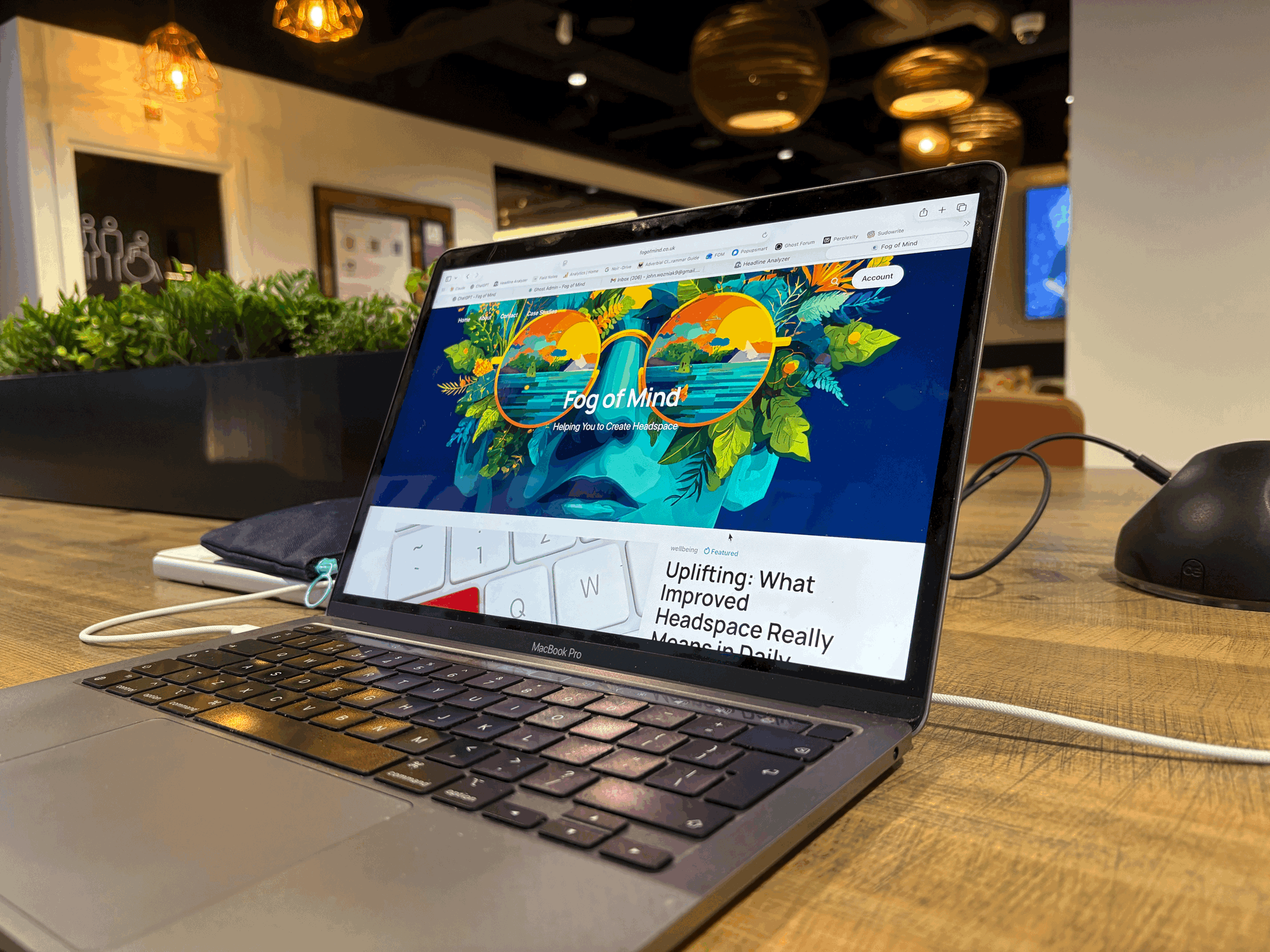
“Uplifting: What Improved Headspace Really Means in Daily Life” takes common wellbeing language and translates it into practical actions: boundaries that actually hold, delegation that genuinely removes pressure, realistic “resets”, and finding your version of meditation (including photography as focus and attention, not performance).
Midweek fog, handled properly
“Unlock Uplifting Headspace on a Forgotten Tuesday” is a simple playbook for overloaded brains: two-minute resets, the “one next thing” method, hydration as a mental performance tool, and reducing visual noise by clearing one surface. The overall message is reassuring: fog is often a bandwidth problem, not a character flaw.
Letting go of the urge to fix everything
“Expert View: Letting Go of the Need to Fix Everything” is aimed squarely at fixers, leaders, and people who absorb everyone else’s stress. It makes the case that trying to care about everything is a fast route to exhaustion, then offers a quick “battle check” filter (responsibility, control, cost, and whether to delegate, delay, or drop). It also lands an important point: build outlets before you need them.
Motivation follows action, not the other way around
“Had Enough? Read This Helpful Post To Improve Mental Health” is one of the most practical pieces on the site so far. It argues that energy can be “borrowed” by stepping into familiar things you already love, and it includes an exercise to list what gives you energy versus what drains it, then make small adjustments rather than dramatic life overhauls.
Mental health is not linear, and asking for help is a skill
“Expert View: Mental Health Is Not A Straight Line” and “Energise: It is Time to Change Your Foggy Perspective” sit well together. One frames recovery as something you learn to live with and respond to earlier, not a neat before-and-after story. The other offers a simple perspective experiment: rotate the problem, take information from it, and choose one small action that supports the new angle.
Case studies that turn lived experience into takeaways
The Case Studies page adds weight and credibility: recognising missed warning signs, the reality of panic and “the floor”, and what actually helped over time. It also introduces the Mental Health Triangle (motivation, time, empathy) as a simple framework for recovery and support, especially in workplaces.
Perspective: What Does a Bad Day Look Like?
This is arguably my favourite post of all time. This post reframes “wellbeing” as something practical, not performative: headspace is whatever helps you think clearly, breathe properly, and feel back in control in your actual life, not as a trend or badge. Please check it out.
What’s coming next
Fog of Mind is built around 1:1 support, talks, workshops, and longer programmes for organisations, with a practical, judgement-free approach.
You’re also developing several workshop concepts for potential clients right now, and at this stage it is about getting the word out.
If you know a team, GP practice, school, charity, public sector department, or SME that could benefit from a grounded mental health session, point them to the Contact page or share the direct details (email and phone are listed).
If you want to help spread the word
- Forward this to one person who carries a lot quietly.
- Mention Fog of Mind to a manager or HR contact who talks about wellbeing but needs something more human and practical.
- Share one post that matched your week (Tuesday resets, boundaries, perspective flips, or the energy list) and add one line about why it helped.
Help someone find headspace. Share this.
Sign up and check your spam folder.