Your Nervous System Is Not Broken It Is Burned Out
There is a phrase that gets passed around wellness circles like a well-worn tabloid: nervous system regulation. Strip away the language and what it describes is something most people will recognise immediately.

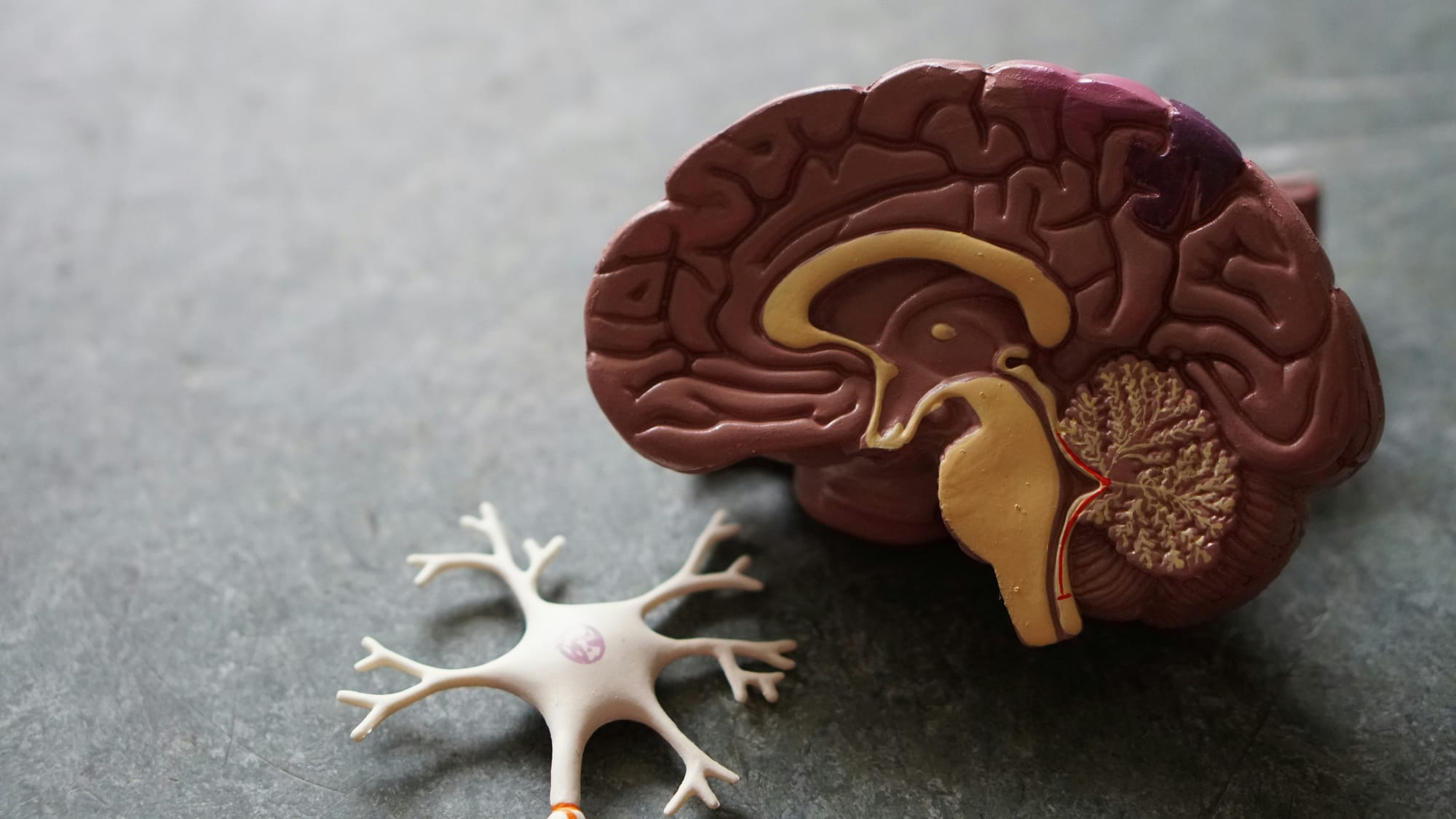
Three Signs Your Nervous System Is Burned Out and Needs a Reset
Welcome back to Fog of Mind. In this article we will look at three key aspects of your nervous system and we'll discuss the Vagus nerve. There is a phrase that gets passed around wellness circles like a well-worn tabloid: nervous system regulation. It sounds either clinical or faintly mystical, depending on your threshold for jargon. But strip away the language, and what it describes is something most people will recognise immediately. That feeling of being permanently switched on, even when there is nothing left to respond to.
Not anxious, exactly. Not depressed. Just running hot. Braced. Like you are waiting for a punch that never quite arrives.
That is not a personality flaw. It is not burnout in the conventional sense, though the two are closely related. It is, in the most literal terms, a nervous system that has been asked to perform a function it was never designed to sustain: permanent, low-level threat detection in an environment that never fully switches off.
A word of caution before we go further. Nervous system health is a subject attracting significant attention online, and with that attention comes misinformation. Not everything marketed as a nervous system reset is grounded in evidence. This article draws on published research, linked throughout, but it is not a substitute for professional medical or psychological advice.
What Your Nervous System Was Actually Built to Do
The autonomic nervous system operates in two broad modes. The first is the sympathetic state, the one most of us know best even if we do not know its name. Heart rate up. Digestion down. Pupils dilated. Muscles primed. This is fight-or-flight: the evolutionary toolkit for surviving acute danger, developed over hundreds of thousands of years and remarkably well-suited to the threats our ancestors actually faced. Short. Sharp. Survivable.
The second is the parasympathetic state, sometimes called rest-and-digest. The system that slows the heart, restores digestion, enables sleep, consolidates memory, and allows the body to repair itself. This is the mode humans were designed to spend most of their time in.
The problem is not that the sympathetic system exists. The problem is that modern life, its pace, its noise, its notifications, its news cycles, its professional demands and social pressures, has learned to trigger it constantly, without ever providing the resolution that allows it to stand down.
The nervous system cannot distinguish between a deadline and a predator. It only knows threat, and it responds accordingly.
In evolutionary terms, the stress response was designed to end. You run, you fight, you hide, the predator leaves or does not, and either way the immediate uncertainty resolves. The nervous system gets its cue to stand down. That cue never comes from an unread message. The threat is always still there, always just slightly out of resolution, always worth monitoring.
Research published in Neuroscience and Biobehavioral Reviews describes this mismatch between our evolved stress architecture and modern environmental demands as a central driver of chronic dysregulation. Godoy et al., 2018
Why Burnout Is a Nervous System Problem
This is the piece that most conversations about burnout miss. We talk about it as an emotional condition, a feeling of exhaustion, detachment, loss of purpose. Those things are real. But they are symptoms of something that happens at a neurological level first.
When the sympathetic system operates for long enough without adequate recovery, the body begins to adapt. Cortisol, the primary stress hormone, shifts from a useful short-term tool to a chronic background presence. The vagus nerve, which connects the brain to the heart, gut and lungs and plays a central role in parasympathetic function, loses tone. The window within which the nervous system can regulate itself narrows considerably.
The result is what researchers call allostatic load: the cumulative physiological cost of chronic stress. McEwen, 1998, The New England Journal of Medicine. The body is still functional. It is just running at a permanently elevated baseline, consuming resources it cannot replenish at the rate they are being spent.
What this feels like in lived experience varies. It might be that you cannot read a book anymore, not because you are unintelligent, but because sustained concentration requires a parasympathetic state you can no longer easily access. It might be that small things feel disproportionately infuriating. That you sleep badly but also cannot face the day. That you have forgotten what it feels like to be genuinely, quietly calm.
The Three Signs Your Nervous System Is Running on Empty
The clinical literature points to three consistent markers of chronic dysregulation that are worth knowing.
The first is hypervigilance without cause. A persistent sense of unease or bracing that has no identifiable trigger, and does not resolve with reassurance or rest.
The second is somatic load. Physical symptoms including jaw tension, shallow breathing, digestive disruption, and chronic muscle tightness that do not respond to conventional treatment because their origin is neurological, not structural.
The third is emotional narrowing. The loss of access to the full register of emotional response. Things that once felt pleasurable or interesting begin to feel flat. This is not depression as such, though it can precede it. It is the nervous system conserving resources.
The Vagus Nerve: Your Reset Switch
The vagus nerve, from the Latin for wandering, is the longest cranial nerve in the body. Running from the brainstem through the heart, lungs and gut, it is the primary conduit for the parasympathetic response. When its tone is high, the nervous system is flexible, able to respond to stress and return to baseline. When its tone is low, as it typically is in chronic stress, that flexibility is lost.
The reason this matters practically is that vagal tone can be trained. Not with medication, not with apps, but with simple, evidence-supported practices that send the nervous system the signals it needs to downregulate.
Research by Porges, whose Polyvagal Theory has been influential in this field, describes the vagus nerve as central to what he calls the social engagement system, our capacity to feel safe, connect with others, and recover from stress. Porges, 2009, Cleveland Clinic Journal of Medicine
Slow, diaphragmatic breathing is the most accessible intervention. Specifically, extending the exhale longer than the inhale, because the exhale activates the parasympathetic response in a way the inhale does not. Box breathing, the 4-7-8 method, physiological sighs: the mechanics differ, the underlying principle is the same.
What a Nervous System Reset Actually Requires
The language of reset is somewhat misleading. It implies a single intervention with a definitive outcome, like restarting a computer. What the research actually supports is a slower, more cumulative process: the gradual restoration of the nervous system's capacity for flexibility.
Some of what supports that process is counterintuitive. Cold exposure, a brief cold shower, activates the sympathetic system acutely, but the recovery period that follows appears to build parasympathetic tone over time. Physical movement that engages the body completely, particularly anything rhythmic, can discharge stored stress hormones in a way that purely cognitive strategies cannot. [van der Kolk, 2014, The Body Keeps the Score]
Social connection is among the most potent nervous system regulators we have. Genuine, non-performative interaction with people whose presence feels safe. Research on the social engagement system suggests that the cues processed through facial expression and vocal tone have a direct downregulating effect that text-based communication cannot replicate.
And then there is the matter of chronic threat load: the background conditions that keep the sympathetic system active in the first place. Reducing screen time before sleep. Managing information consumption deliberately. Protecting unstructured time, time without productivity demands or social obligations, which the nervous system requires for genuine recovery.
Box Breathing: A 3-Minute Nervous System Reset
This technique is used across military, clinical and performance settings and activates the parasympathetic nervous system through structured breath control.
Inhale for four counts. Hold for four. Exhale for four. Hold for four. Repeat for five cycles. Do it slowly, sitting upright, with your eyes closed if the setting allows.
The exhale phase is where the parasympathetic response is primarily activated. Do not rush it.
A 2017 study in Frontiers in Psychology found that slow-paced breathing at approximately six breath cycles per minute significantly increased heart rate variability, a key marker of vagal tone and parasympathetic activity. Zaccaro et al., 2018
A Note on Willpower
One of the more pernicious features of the current cultural conversation about stress is the degree to which it returns, eventually, to personal responsibility. The suggestion, explicit or implied, that people who are struggling simply have not tried hard enough, meditated correctly, exercised sufficiently.
This framing gets the causality backwards. A chronically dysregulated nervous system actively undermines the capacity for the behaviours that would help to regulate it. It impairs executive function, reduces motivation, disrupts sleep, and narrows the emotional window in which considered choices feel possible. Telling someone in that state to simply try harder is roughly equivalent to telling someone with a broken leg to walk it off.
Your nervous system is not broken. It is doing exactly what it was designed to do, in conditions it was not designed for. The distinction matters because one implies pathology, and the other implies a problem that is, with the right approach, genuinely solvable.
Read next on Fog of Mind: What No One Tells You About Burnout. The Anxiety Trap. When the Body Holds the Memory.
Subscribe at fogofmind.co.uk